
Into the Earth: Kansanshi’s Underground Story
How a bold underground engineering project keeps Zambia’s largest copper mine from flooding.
There’s no shortage of water in Zambia’s North-Western Province. The region receives an average of 1,500 millimetres of rainfall annually, often more than ten times the national average.
Beyond the skies, water also bursts forth from the ground in remarkable abundance. The Kafue and Zambezi rivers originate here, along with the Lunga, Kabompo, and several other vital waterways.
But in this water-rich landscape, abundance comes with its own challenges. While seasonal rainfall presents difficulties of its own, it was the underground water-the deep aquifer-that once posed
a major threat to Zambia’s largest copper mine.
When Kansanshi Mine’s main pit reached a depth of 150 metres, it cut into the aquifer. Water began seeping through the pit walls at an alarming rate. Without swift and strategic intervention, the rising inflow could have forced the mine to
shut down entirely.
The solution? A bold feat of engineering: constructing a tunnel that stretches a mile into the earth, designed to intercept the aquifer well below the floor of the open pit. Simple? Far from it…

What is an aquifer?
An aquifer is a layer of water-bearing rock that sits on top of non-permeable rock. (Picture a wet sponge sitting on a plate.) Unfortunately, the rock is not evenly saturated. Some areas are dry, while other areas contain large amounts of water.
The Options
To prevent Kansanshi Mine from flooding, the technical team explored a range of ambitious and unconventional options.
One idea was to pour cement along the pit walls, effectively turning them into dam walls. While feasible, this solution was quickly ruled out; it would have been prohibitively expensive, time-consuming, and risked increasing environmental contamination within the mine area.
Incredibly, the team even considered Artificial Ground Freezing, a technique that involves sinking shafts into the aquifer and using industrial chillers to freeze the underground water.
Though promising in theory, the method was ultimately dismissed due to the immense electricity demand it would have required, far beyond what was practical or sustainable for the mine.
After weighing the alternatives, the team settled on a bold and effective solution: to build an underground decline, essentially a tunnel that would reach deep into the aquifer and intercept the water before it could reach the open pit. From there, it would be pumped out safely, preserving operations.
Without this intervention, Kansanshi Mine might have shut down long ago. Thanks to it, the mine’s lifespan has been extended by an estimated 20 years.
The tunnel itself is a remarkable feat of engineering: 4.5 meters wide, 5 meters high and stretching 1.6 kilometres into the ground.
Drilling Into the Flood
The trouble with developing a tunnel into an aquifer is that water is not evenly spread through the rock.
Some areas are dry, while others are full of water. Thinking of the sponge again: imagine the sponge was poorly made.
Some parts don’t absorb any water, while others hold enormous amounts. In spite of extensive surveys, the underground team encountered a number of surprises.
October 2023
Before blasting, the underground team were drilling a hole for a support structure. They had no idea that there was a large water body sitting in the rock above them.
At 4.5m wide, 5m tall, and 1.6km deep, the Kansanshi decline is large enough to accommodate vehicles. Imagine taking a drive deep into the earth’s crust! As they drilled, water began to surge out of the hole and started flooding the tunnel.
The water in the tunnel rose at about two meters per minute, leaving the team with very little time to evacuate themselves and their equipment from the tunnel.
Though they were able to save some equipment, much of it had to be left behind. 650 meters of the tunnel flooded.
Significant additional pumping capacity had to be installed, and it took until Christmas eve for the underground team to get the flooding under control and return to the point where they had been on that day in October.
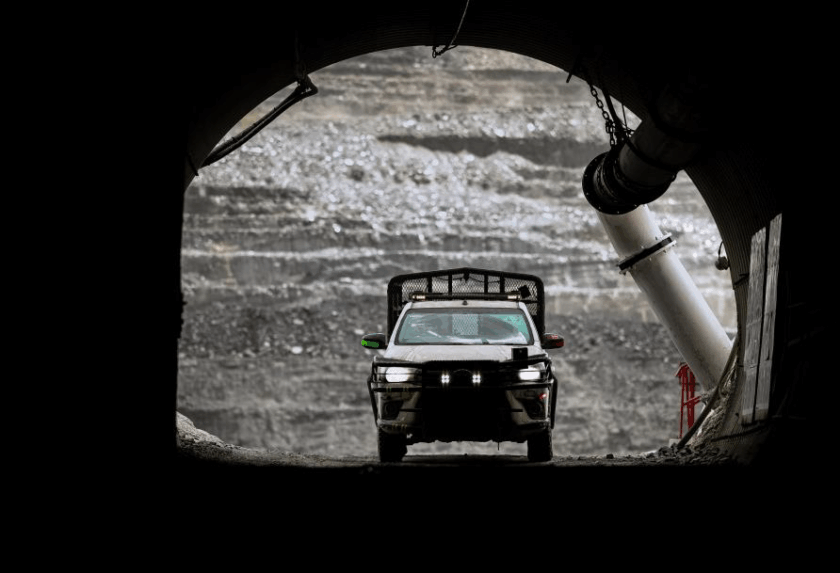
Perseverance: The Only Option
This is just one example of the numerous setbacks faced by Kansanshi’s underground project. The tunnel has flooded at other times as a result of electricity outages and surges that caused pumps to fail, burst pipes, pump breakdowns, and other component failures.
On the 21st of November 2023, a rock fell onto one of the team members, tragically ending his life. Failure, though, would have meant shutting down a mine that provides over 10,000 jobs and contributes a significant portion of Zambia’s national tax revenue. The implications would have been dire, not just for Kansanshi but for Zambia.
Perseverance was the only option, and the constant challenges strengthened the team rather than wearing them down.
Damien Van Straaten, the project’s [role?] reflects: “With each challenge we’ve encountered, we built confidence in ourselves. We built experience that we can use to keep this project going and take on to other projects.”
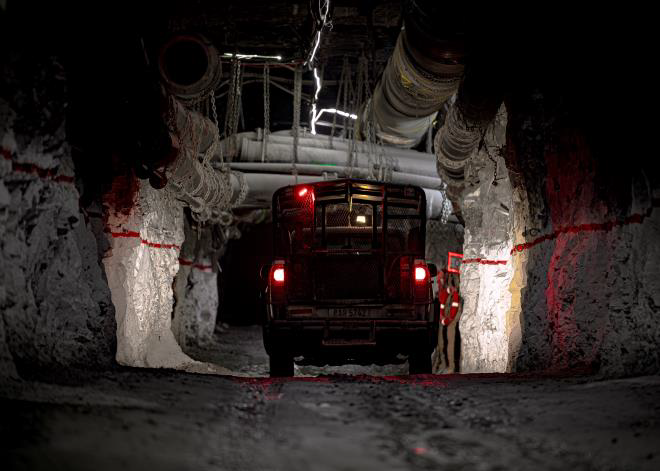
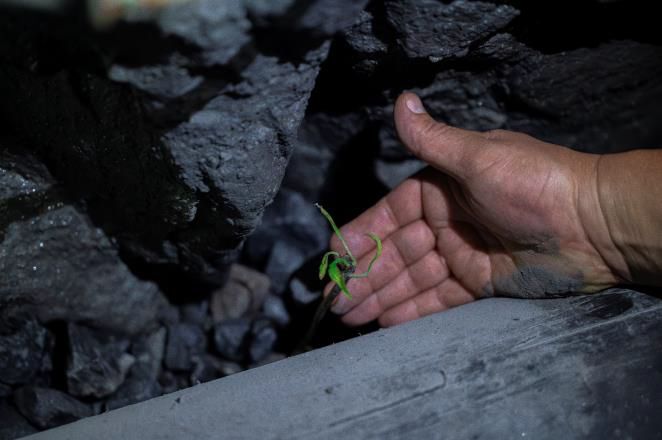
Trees underground? The story goes that one of the underground team members once threw a mango seed into a crevice behind a pipe. To everyone’s surprise, a few weeks later a seedling appeared.
Keeping Safe
Working underground poses significant risks, and at Kansanshi Mine, these dangers are taken very seriously. To ensure the safety of personnel, access to critical underground areas is limited to a select group of highly trained individuals.
In addition, the mine is equipped with refuge chambers—self-contained units that provide electricity and oxygen. These chambers are designed to safely shelter up to 30 people in the event of an emergency.
Understanding the Underground
The image below is a cross-section of Kansanshi Mine’s main pit. Near the bottom of the pit, a tunnel (referred to as the decline) enters the ground at an angle of roughly 10 degrees below horizontal.
Navigating between water bodies, the tunnel winds one mile through the earth until it arrives at its final destination.
Labelled “New Shaft” on the image above, a vertical tunnel intersects with the end of the decline. From here, water is pumped out of the aquifer, allowing Kansanshi Mine to stay open.
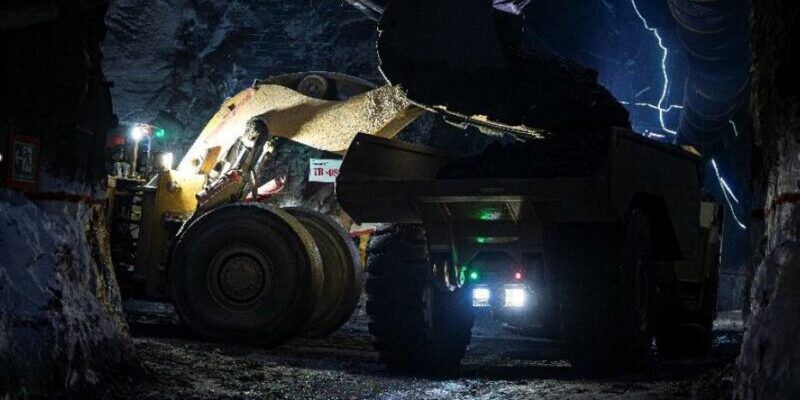
Specialized underground
mining and haulage
machinery does the
constant work of
digging and removing
rock to shape and
repair the underground
Structures.
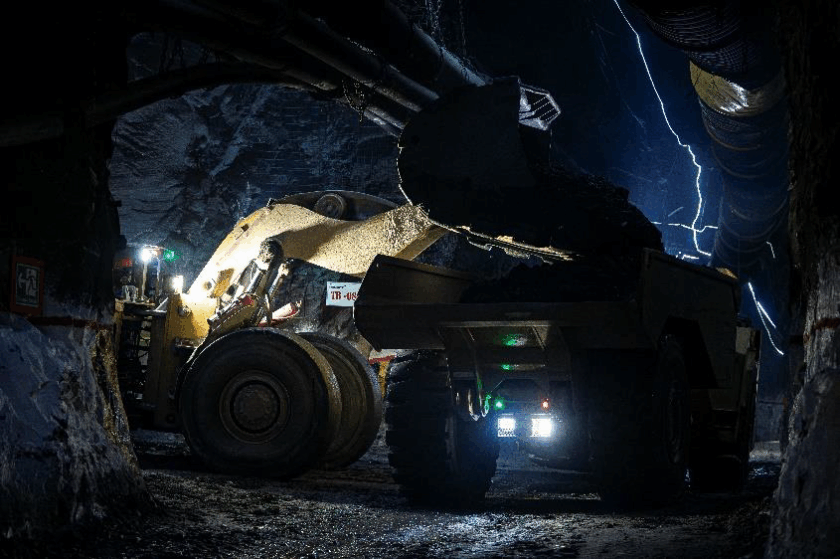
It Never Ends
In November 2024 the underground team reached what is, for now, their final destination. They had tunneled a mile into the earth: 125 meters below the bottom of the pit and 350 meters below the level of the surrounding terrain.
The work does not stop there, though. The entire purpose of the decline is to pump water out of the deep aquifer.
At any given time, an army of pumps is running, moving 27,000 cubic meters (11 Olympic swimming pools) per day.
This water is not wasted. It is used to run Kansanshi’s copper processing plant and smelter. During dry days, water bowsers spray it on the roads to suppress dust.
Coming from an aquifer, the water is clean and safe for any use. On a mine site like Kansanshi it has many uses.
In addition to running the pumps, the underground team performs constant maintenance, keeping the decline open and safe for use.
Their hard work and unwillingness to fail goes unseen by many: even to their colleagues in the mine’s pit they are invisible, hidden away in the Earth. Without them, though, Kansanshi Mine would flood and Zambia’s economy would struggle to stay afloat.
“We are a very proud team that has endured a lot of challenges together, and ultimately succeeded. I will proudly take this whole team with me to any similar projects I work on in the future.” – Damien Van Straaten
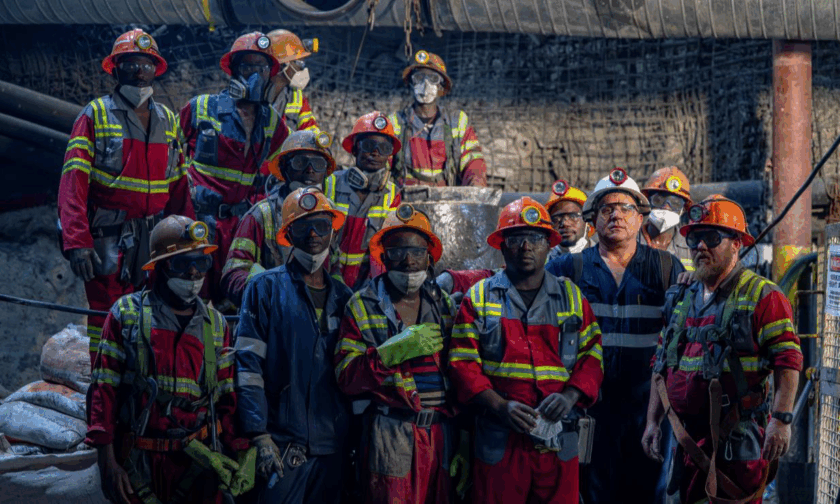
The Underground Team:
Aubrey Simusokwe, Mickey Siwale, Adius Mullonga Ngosa, Robert Manbisa, Rapheal Simwizye, Jacob
Chivuna, Bright Mwila, Nalishebo Muyatwa, Kelvin Chongo, Edson Chitomwe , Torad Chenga, Damien van Straaten, Marthinus Roos